
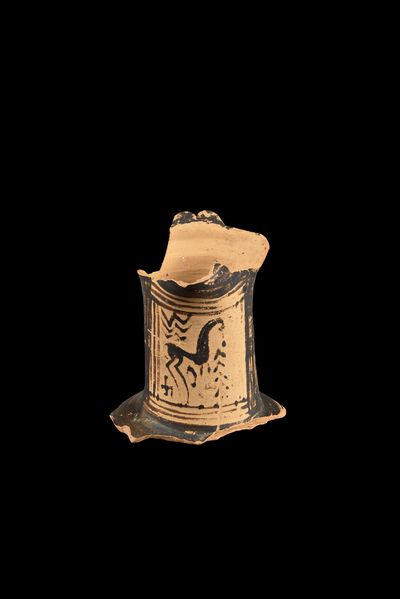
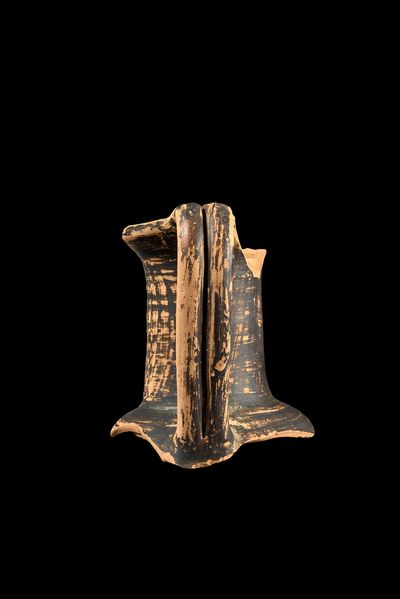
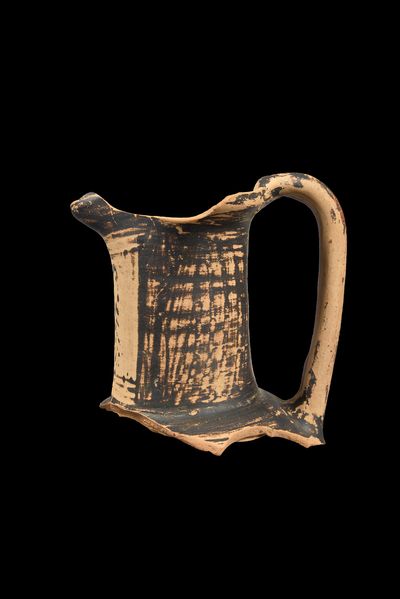
On the neck there is a metope with a depiction of a horse and filling ornaments (swastikas, rhombus, and zigzags). The rest of the surface is covered with black paint.
The horses played an important role in the life of the ancient Athenians but since buying and maintaining one was very expensive, only the wealthy citizens could acquire horses and train them. Wealthy Athenians with their horses competed in equestrian contests, participated in hunts and served in the cavalry. Horses, as symbols of status for their owners, were depicted in various forms throughout all periods of ancient Greek art. In the Attic pottery produced during the Geometric period –particularly in its mature phase (mid-8th cent. BC)–, horses were a dominant pictorial motif. They appear within panels, grazing in horizontal rows, along with their trainers, in pairs dragging chariots with warriors or pulling a carriage carrying a deceased to the cemetery. It is evident that during the period when the city-state of Athens began to take shape, horses played an integral part in political and religious life.