


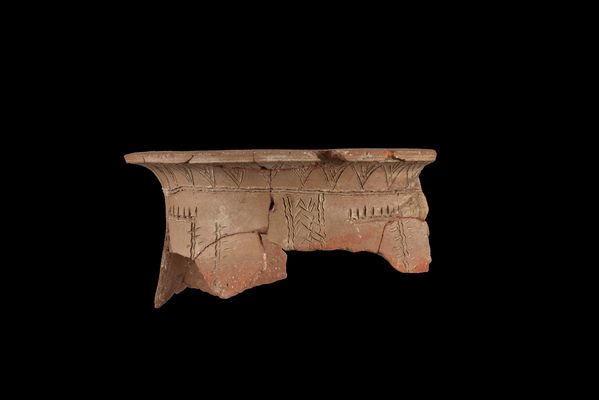
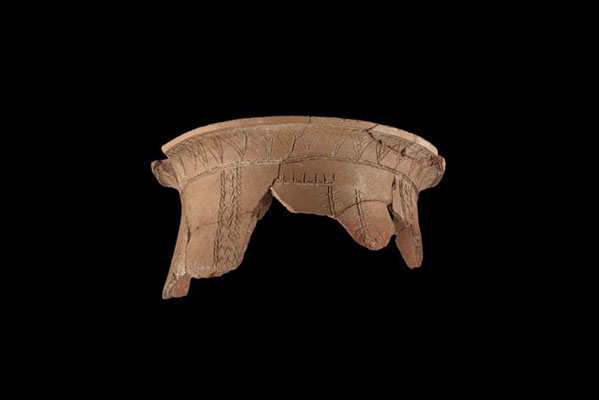
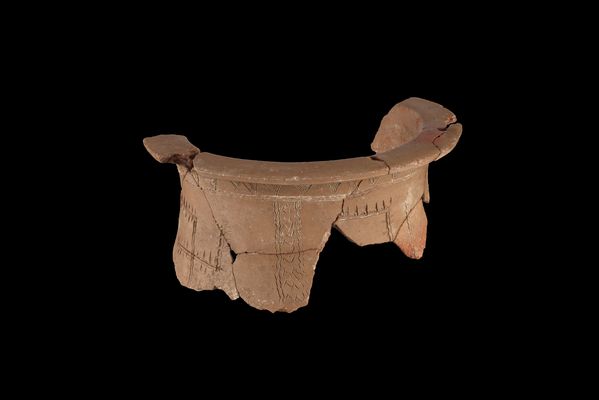
Part of pithos
Inventory number
Μ 2473
Category
Vessel
Period
Geometric Period
Date
735-700 BC
Dimensions
Height: 0.125 m
Rim diameter: 0.275 m
Material
Clay
Location
Excavation Museum, Case 3, No 16

Inventory number
Μ 2473
Category
Vessel
Period
Geometric Period
Date
735-700 BC
Dimensions
Height: 0.125 m
Rim diameter: 0.275 m
Material
Clay
Location
Excavation Museum, Case 3, No 16
The use of your data is described in the privacy settings